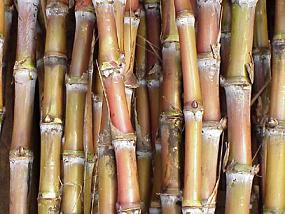
Showing posts with label Sugar. Show all posts

Monday, July 26, 2010

Cuba and Cane Sugar By: Matthew Barker


Cuba and Cane Sugar By: Matthew Barker

Cane sugar has been known by humankind for several millennia before Christ due to its sweetness; according to descriptions of travellers to India, the inhabitants of the Indo Valley chewed the cane in order to obtain the juice of it some 500 years B.C. In Spain, the cane sugar made its entrance during the Moorish period, and Christopher Columbus included the cane among the animals and plants he brought during his third trip to the New World (August 30, 1498). Planted in the soft lands of Santo Domingo and due to the weather of the tropics, the sugar cane grew so fine as to produce the best of its sweetness. Already in 1506, Brother Bartholomew of las Casas made reference to the first rustic sugar mill on the island.

As almost everything brought to Cuba during that time, the conqueror Diego Velazquez was the one to introduce the sugar cane from Santo Domingo; and from that moment on, the settlers began to produce guarapo (the juice extracted from the cane) necessary for obtaining the sugar. The surplus of this home-made sugar elaboration was the main basis to trade with other settlers; and the sugar plus salted meat and corn became the basis to trade with pirates in order to get slaves.

The first commercial sugar mill was installed during the last decades of the 16 century in the Havana area and already in 1600, 60 sugar mills were functioning. During this period, Cuba was behind La Hispaniola and other colonies in the sugar production. It was during the Storming of the English in 1762 that the Cuban trade opened and an increase of the sugar production was seen. The first production was counted in 1799 and it reached six thousand tons with the six hundred sugar mills existing at the time.

Sugar refineries did not appear until the first decades of the 19th century with the introduction of the steam engine. According to a census of that period, in 1830 there were more than one thousand sugar refineries producing around 94 thousand tons; and when in 1837 the steam locomotives arrived in Cuba, the sugar production increased to unprecedented figures. Cuba was the seventh country in the world to have railroads, and the first in Latin America thanks to the rising sugar industry.

The independence of Cuba on May 20, 1902 favored the introduction of new machinery and the presence of American capital. With less than 200 large sugar mills in 1925, the rising Cuban nation produced more than five million tons of sugar. During this period, the vast majority of sugar mills and sugar plantations were in the hands of foreign capital; however, some social laws applied between 1935 and 1945 made possible that in 1950 of 161 large sugar mills working, 131 were in the hands of Cubans, controlling 60% of total production.

With the Triumph of the Revolution, the sugar mills were nationalized and became socialist companies as well as the majority of the plantations that were in the hands of small and leading producers. Although the millionaire productions were kept, the industry and agriculture based on the sugar cane have been declining during the last 50 years. Nowadays, sugar is not an important product in the trading scale of Cuba. Almost 70 large sugar mills have been dismantled, and a huge part of the sugar cane cultivated today is destined to the production of sugar-cane syrups and refined spirits for the chemical industry, the pharmaceutical industry and the liquor production (the Havana Club rum being among them). The last known results of a sugarcane harvest dates from 2006-2007 with a production of 1,115,000 tons of sugar, quite similar to the harvest of 1894.

This brief history of Cane Sugar in Cuba was written by a Cuba travel expert from Cuba For Less, a specialist in fully customizable Cuba vacation packages.

Article Source: http://EzineArticles.com/?expert=Matthew_Barker

Sugar Commodity Futures Trading - Here Are Some Sweet Sugar Trading Tips That You Should Know By: Mike Singh

Sugar Commodity Futures Trading - Here Are Some Sweet Sugar Trading Tips That You Should Know By: Mike Singh

The widespread use of sugar and its by-products, which include the use of ethanol, has made sugar futures contracts a highly profitable venture if and when you know how to play the market. Here are a few thoughts and tips on the matter.

For beginners in the commodity market, engaging in the trade of sugar futures contracts is a great way to acquire knowledge and experience in investments. The most notable of properties of this commodity market is the fact that only small margins are required and that the market rarely makes extreme moves in either direction. Thus, traders and investors can wait to make their move for more favorable conditions.

However, there have been instances when the price of sugar in the worldwide market has experienced extreme swings, thus, affecting investments in sugar futures contracts. Investors are well advised to be mindful of such wild swings, no matter that it happens rarely. Also, it will help to know that the sugar industry appears to make big moves every eleven years or so.

For normal markets, investors can buy plenty of time before making their moves especially as strategies for straddles, strangles and spreads are very abundant, indeed. The use of swing trading techniques and wave analysis during long-term formations and patterns are highly recommended.

If you are to follow the pyramiding technique, which is very risky, you have to ensure that catastrophic stops are adjusted so that losses may not be as great if and when the market reverses on itself.

During big moves in the market, you must look to exit positions. The best time to do so is either near the close of the trading day or during the morning opening. This is because the sugar futures market has a tendency to reverse after extremely large moves by offering big gaps the following trading day. As much as is practicable, don't keep your big profits over the weekend in the belief that Monday will present an opportunity for a large follow through.

Another effective trading technique that almost always assures equal chances of profit and loss is called scaling out. Basically, you sell one-half and keep one-half of your position, which means that you are always one-half right and one-half wrong no matter the trading decision you make. It is not for everybody though especially for those who desire an all-or-nothing stand on the futures sugar contracts.

You should also look into the opportunities generated by the TimeLine forecast, which shows strong moves in either direction for the sugar industry and, consequently, its related futures contract. To make a long story short, it allows the investor to focus on the possible directional positions and, hence, make a more informed decision.

You also have to consider using the automated option software. This way, you can take the tedious work of calculations out of the way and instead focus on the qualitative analysis that must be done with the quantitative data on hand.

In conclusion, no matter the strategy adopted in sugar futures contract speculation, you must take calculated risks. The abilities to analyze trends, make forecasts, and understand the quantitative information generated by various tools are necessary to make informed decisions and, hence, calculated risks. Use such an ability and be rewarded with profits more than you can possibly earn on your day job.

You might not know that trading sugar commodities profitably isn't that difficult. Visit http://www.commodities-trading.org/ to learn more.

Article Source: http://EzineArticles.com/?expert=Mike_Singh